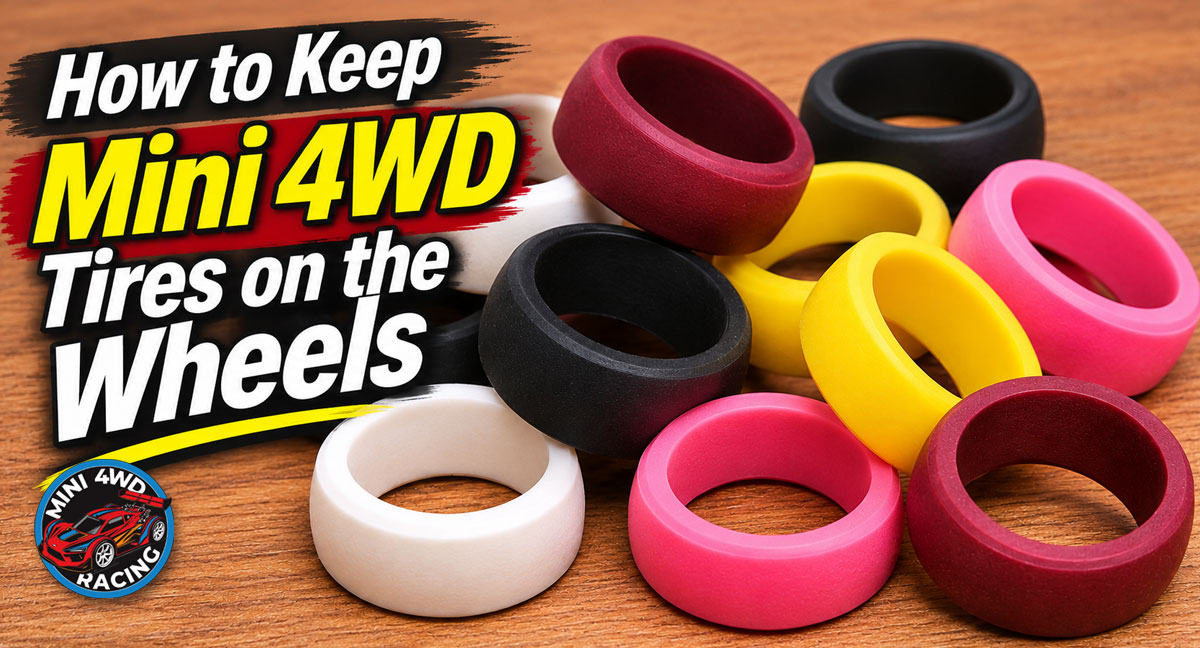
How to Keep Mini 4WD Tires on the Wheels: Dry Fit, Tape and Glue Compared

Mini 4WD cars may be small, but their tires have a big job. Between high-speed straights, sharp corners and hard landings, those little rubber rings take quite a beating.
One common problem is tires that loosen, slip or come completely off the wheels. Some racers recommend double-sided tape, others swear by super glue while plenty of builders don't use any adhesive at all.
So, which method is best?
The short answer is: start with a dry fit. If the tires won't stay in place, consider tape or glue. As a side note, be sure to always check your racing class rules first.
Why Do Mini 4WD Tires Come Loose?
Mini 4WD tires are designed to stretch over their wheels and stay in place through friction. When the tire and wheel are properly matched, that friction is often enough to keep everything together.
However, tires can loosen for several reasons:
-
- Repeated removal: Stretching tires on and off the wheels can gradually reduce their grip.
- High-speed running: Centrifugal forces can encourage loose tires to expand or shift, especially the softer compounds.
- Hard impacts: Jumps, crashes and rough landings can knock a poorly fitted tire out of position.
- Incorrect sizing: Tires and wheels that aren't designed for each other may never fit correctly.
- Wear or damage: Older tires can stretch, crack or lose their original shape.
Before reaching for adhesive, make sure the tire is actually the problem.
Dry Fit vs. Tape vs. Glue
Each mounting method has advantages and disadvantages.
| Method | Advantages | Disadvantages |
|---|---|---|
| Dry Fit | Simple, clean and easy to remove | Loose tires may slip or come off |
| Double-Sided Tape | Adds grip without permanently bonding the tire | Can create bumps, gaps or uneven seating |
| CA Glue | Strong bond that helps prevent tire movement | Difficult to remove; mistakes can damage tires and wheels |
For most beginners, dry mounting is the best place to start.
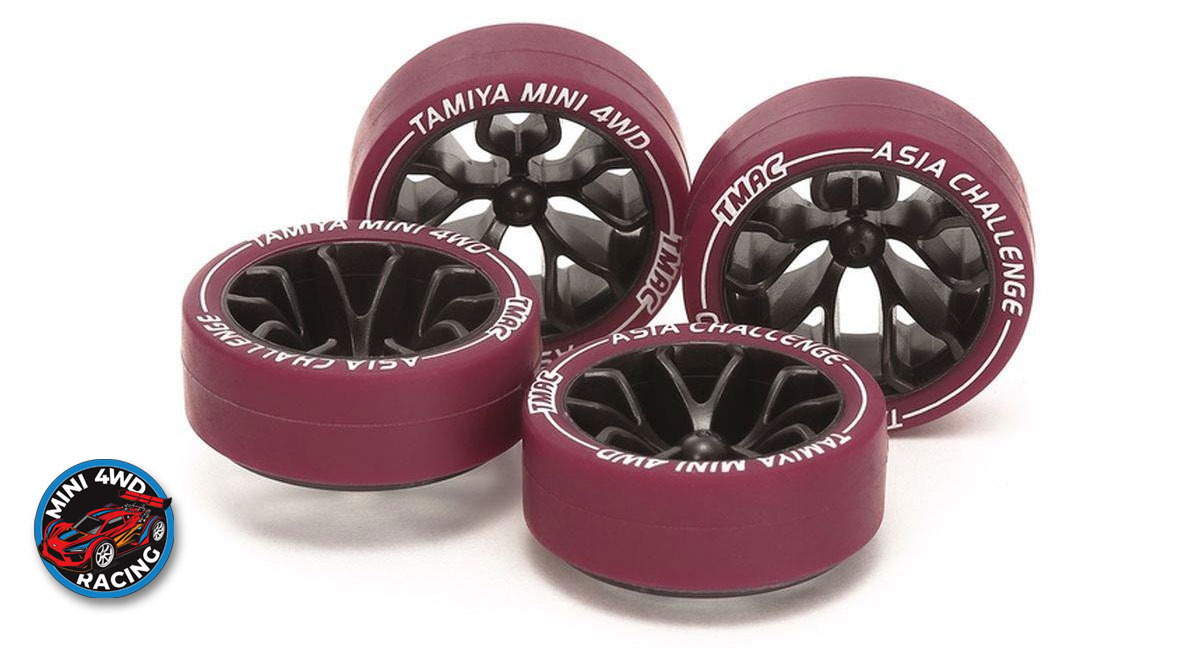
Method 1: Dry Fitting Mini 4WD Tires
A dry fit means installing the tire directly onto the wheel without tape or glue.
Start by checking that the tire and wheel are the correct size. Stretch the tire evenly over the wheel, then work your fingers around both edges until the tire is fully seated.
Once installed, gently try twisting the tire around the wheel. If it stays firmly in place, it's a good sign you don't need adhesive.
Best for: New builds, Box Stock cars and tires that already fit tightly. A good dry fit is usually better than a poor glue job.
Method 2: Using Double-Sided Tire Tape
Double-sided tape provides extra grip while keeping the tire removable in many cases.
Tamiya even offers a Mini 4WD Double-Sided Tape Set (Item 10304), designed for applications including securing tires to wheels.
To install tire tape:
- Remove the tire and clean the wheel.
- Apply a thin, even strip of double-sided tape around the wheel.
- Avoid overlapping the ends or creating wrinkles.
- Carefully stretch the tire over the wheel (a light coat of Windex will help you do this. When the Windex dries, the tape will seal itself to the tire and wheel).
- Work around the tire until both edges are fully seated.
The biggest problem with tape is thickness. If the tape is too thick, too wide or unevenly applied, it can prevent the tire from sitting flush against the wheel. This creates a visible gap or a tire that looks slightly lopsided.
Use thin tape intended for the job, and don't stack multiple layers to compensate for an incorrectly sized tire.
Best for: Slightly loose tires when tape is permitted by the racing rules.
Method 3: Using CA Glue
Cyanoacrylate (CA), commonly called super glue, creates a stronger bond between the tire and wheel.
It's useful for tires that repeatedly slip during racing, particularly on faster setups where a secure installation is important.
However, glue requires WAY more care than tape (and isn't necessarily recommended).
First, install the tire without adhesive and confirm that it sits evenly. Once you're satisfied with the fit, carefully lift a small section of the tire edge and apply a tiny amount of suitable CA glue at the contact point between the tire and wheel.
Work in small sections, keeping the tire correctly positioned as you go. Allow the adhesive to cure completely before running the car.
Avoid flooding the wheel with glue. Excess adhesive can leave hardened lumps, discolor plastic or bond the tire in the wrong position. CA glue can also bond skin instantly, so use it carefully in a ventilated area.
Best for: Racing setups where tires repeatedly come loose and adhesive is permitted.
Also note that a glued tire may be difficult to remove without damaging it.
How to Prevent Uneven or Wobbly Tires
Whether you're using tape, glue or nothing at all, the tire needs to sit evenly around the wheel.
An off-center tire can introduce vibration, reduce consistent track contact and make the car less predictable.
After installation:
- Check that both tire edges sit evenly against the wheel.
- Look for gaps between the tire and wheel.
- Rotate the wheel slowly and watch for visible up-and-down movement.
- Check for side-to-side wobble.
- Correct any problems before running the car.
If you have a tire truing or wheel inspection tool, it can make checking concentricity easier. Otherwise, rotating the wheel by hand against a fixed visual reference works for a basic inspection.
Keep in mind that a bent axle or damaged wheel can also cause wobble. Adhesive won't fix either problem.
Can You Remove Tape or Glue From Mini 4WD Wheels?
Double-sided tape is generally easier to remove. Carefully peel away the tire, remove the remaining tape and clean off any residue using a plastic-safe method.
CA glue is another story.
Once cured, it may bond strongly enough that removing the tire tears the rubber or damages the wheel.
Avoid soaking Mini 4WD wheels in acetone or aggressive glue removers. Some solvents can soften, weaken or damage plastic.
If the tire is firmly glued and already worn out, replacing the tire and wheel together may be the simplest solution.
Are Tape and Glue Legal in Mini 4WD Racing?
This is where things get interesting. Just because a mounting method works doesn't mean it's legal in your racing class.
Box Stock: These classes generally require cars to be assembled according to the kit instructions with very limited modifications (if any). Some organizers specifically prohibit double-sided tire tape. Never assume adhesive is allowed.
Stock: Tamiya's Stock Class has its own regulations. Check the current rules and ask the organizer whether your chosen tire attachment method is permitted.
B-Max: B-Max rules generally allow more setup options than Box Stock. Some published B-Max regulations explicitly permit double-sided tire tape, but requirements can differ between events and rule versions.
Open Class: Tire attachment methods are generally more flexible, although overall tire dimensions, modifications and safety requirements still apply.
Always check the regulations for your specific event before permanently modifying your wheels.
When Should You Replace the Tires Instead?
Sometimes adhesive is only hiding a bigger problem.
Consider replacing the tire or wheel if:
- The tire is visibly stretched or damaged.
- It slips off even after careful installation.
- The tire doesn't match the wheel size.
- The wheel is cracked, bent or distorted.
- Tape creates large gaps or an uneven fit.
- Old adhesive prevents the tire from seating correctly.
Mini 4WD tires and wheels are relatively inexpensive compared with the frustration of chasing a handling problem caused by a bad fit.
FAQ
Q: Do Mini 4WD tires need to be glued?
A: No. Many Mini 4WD tires fit securely without adhesive. Glue is an option when additional retention is needed and racing rules permit it.
Q: Is double-sided tape better than super glue?
A: Neither is always better. Tape is less permanent and easier to work with, while CA glue creates a stronger bond. The correct choice depends on tire fit, racing conditions and class rules.
Q: Why does my tire have a gap after installing tape?
A: The tape may be too thick, too wide, wrinkled or overlapping. Remove the tire and check the tape before reinstalling it.
Q: Can I reuse Mini 4WD tires?
A: Yes, provided they remain in good condition and still fit securely. Tires that have become stretched or damaged should be replaced.
Q: Can loose tires affect Mini 4WD performance?
A: Absolutely. A loose or uneven tire can create vibration, inconsistent traction and unpredictable handling. In extreme cases, the tire may come off during a race.
